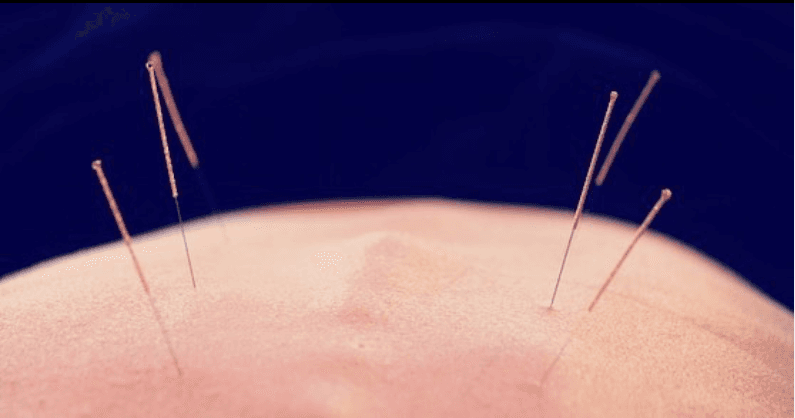
The interest of anti-inflammatory acupuncture treatment lies in the fact that inflammation appears to play a role in the mechanics and maintenance of many common diseases.
Anti-inflammatory acupuncture*
What is inflammation?
Redness, heat, pain, and swelling are the clinical signs of inflammation. A limitation of function or movement can also be a consequence of inflammation. While pain and inflammation often go hand in hand, there can sometimes be pain without the ''heat'' being involved, as in cases of pain from ''cold-dampness'' (hanshi).
How has the effect of anti-inflammatory acupuncture been demonstrated in different health disorders?
Several receptors have been identified in the molecular signaling cascades stimulated by the ''fire'' in the body's chemistry.
Inflammation is a pathological ''fire'' whose flames leave multiple quantifiable physiological traces that can be measured in the bloodstream or tissues affected by a pathological disorder. This is what allows us to measure the onset and resolution of the inflammatory phenomenon. We can therefore obtain objective measurements of the presence of these inflammation markers before and after anti-inflammatory acupuncture treatment.
Acupuncture or medication
Several medications are commonly used as painkillers or anti-inflammatories. Analgesics broadly speaking are among the 5 most consumed medications by Canadian men. (1) The use of anti-inflammatory acupuncture is in constant progression, as acupuncture is now part of the general discourse addressing the management of chronic pain. (12)
Death is among the side effects of certain medications used in pain treatment ლ(。-﹏-。 ლ) as the opioid crisis cruelly demonstrates. These would have claimed the lives of 7 people per day in 2016. The death rate attributable to opioids would even exceed 10 deaths per 100,000 inhabitants in British Columbia, Alberta, Yukon, and the Northwest Territories. (1)
In an emergency department study30422-3/abstract), acupuncture surpassed morphine in effectiveness for controlling acute pain. (2)30422-3/abstract) This is for good reason: endomorphins, dynorphins, and other endogenous analgesic substances, similar to opiates at the molecular level, which are produced by the body under acupuncture, are ''innate drugs'' that, once combined, are superior in potency to morphine alone. Different frequencies of stimulation on acupuncture points would favor the preferential secretion of specific neuropeptides. (3)
Anti-inflammatory medications do not present the same overdose risks as opioids. However, they also present side effects. For example, certain anti-inflammatory medications that act effectively on inflammation could also harm, in their specificity, signaling pathways involved in the regeneration of injured tissues. This would be the case with Coxib medications (Cox-2 inhibitors). Ice would also have a harmful effect after the initial stage of inflammation, by slowing inflammatory phenomena conducive to regeneration and healing. (4)
Why choose acupuncture?
Acupuncture is safe. Acupuncture acts effectively on pain and inflammation, while being a safe long-term investment since its effects appear to be remarkably durable over time. Indeed, 90% of the benefits of acupuncture treatments targeting chronic pain are retained 12 months after treatment. (9)
 Anti-inflammatory acupuncture, view on Youtube
Biochemical effects of anti-inflammatory acupuncture ⚔️
In comparison with the systemic effects of acupuncture, the field of action of a single anti-inflammatory molecule presents limited scope with respect to the different signaling pathways involved in treating inflammation.
Different acupuncture modalities and points chosen for a given treatment could characteristically regulate biochemical signaling pathways. The manipulations on the needle and the different acupuncture points chosen will thus have specificity in the expected therapeutic effect. The effect of acupuncture on inflammation has been demonstrated through various markers, including certain pro-inflammatory cytokines. LASER acupuncture (acupuncture LASER) would notably be responsible for downregulating prostaglandin E2, C-reactive protein, as well as interleukin-6 (IL-6) (7) (8)

Cytokine model: Interleukin-6 (IL-6)
Several markers, such as IL-1*β, IL-2, IL-4, IL-10, IL-13, GM-CSF (Granulocyte Colony Stimulating Factor) have been used to demonstrate the downregulation of pro-inflammatory factors following anti-inflammatory acupuncture treatment. (5) (6)
Several models have been proposed to explain the anti-inflammatory mechanics of acupuncture.
 Anti-inflammatory acupuncture
The anti-inflammatory mechanisms of acupuncture treatment promote the return to homeostasis and the regeneration of injured tissues. For example, tendon healing by anti-inflammatory acupuncture would promote the stimulation of type 1 collagen production - the most abundant protein in the human organism...and in the animal kingdom-
 Regenerative anti-inflammatory acupuncture
There certainly remain fascinating discoveries to be made about the mechanisms behind how acupuncture treatment works. What we already know is that acupuncture acts at multiple levels on inflammatory processes while improving recovery time.
ANTI-INFLAMMATORY MECHANISMS OF ACUPUNCTURE BY PATHOLOGY
Numerous studies, several using murine models and many others using human models, have begun to elucidate the anti-inflammatory mechanisms of acupuncture by isolating key markers related to inflammatory processes present in different health disorders in particular. Here is an overview of some interesting findings.
Parkinson's Disease
Acupuncture downregulates the expression levels of ERK 1/2 proteins, TNF-α, the cytokine IL-1β and increases the expression of tyrosine hydroxylase - involved in the synthesis of dopamine, epinephrine, and norepinephrine - in gray matter. (11)

Tyrosine Hydroxylase (TH)
Acute Pancreatitis
Electroacupuncture would increase the concentration of IL-10 in patients suffering from moderate and severe acute pancreatitis. The elevation of IL-10 suppresses inflammation and contributes to patient remission. (13)

Interleukin 10 (IL-10) IL-10 inhibits lipopolysaccharides and bacterial products inducing pro-inflammatory cytokines such as TNF-α, IL-1β, IL-6, IL-12.
Colitis
Anti-inflammatory electroacupuncture treatment would increase IL-10, suppress the expression of inducible nitric oxide synthase - an enzyme that produces free radicals - and decrease the presence of malondialdehyde - a biomarker signaling oxidative stress - in tissues. The anti-inflammatory effect of electroacupuncture would therefore be partially due to antioxidant properties. (14)

Inducible nitric oxide synthase - an enzyme that produces free radicals - can be downregulated by anti-inflammatory acupuncture treatment.
Spinal Cord Injury
Acupuncture treatment would increase the level of IL-10 and decrease the concentration of TGF-β, substance P and 5-HT in the blood. (15)
Acute Cerebral Infarction (Ischemic Stroke)
The elevated levels of C-reactive protein, TNF-α, IL-6 and IL-1β in patients with acute cerebral infarction were reversed on the 3rd and 7th day after acupuncture treatment, using a specific scalp acupuncture technique. (16)

C-reactive protein
...
Copyright © 2017 Olivier Roy, AcupuncturistAll rights reserved, reproduction prohibited without the author's permission.
References
(1) Health Canada The five most consumed prescription medications, by sex, age group, and medication category, home-dwelling population aged 25 to 79 years, Canada, 2007 to 2011
(2)30422-3/abstract) Acupuncture vs intravenous morphine in the management of acute pain in the ED
(3) Acupuncture and endorphins☆ Han et al.
''EA of 2 Hz accelerates the release of enkephalin, beta-endorphin and endomorphin, while that of 100 Hz selectively increases the release of dynorphin.. A combination of the two frequencies produces a simultaneous release of all four opioid peptides, resulting in a maximal therapeutic effect. ''
(4) Healing Requires Inflammation
''When you damage tissue through trauma or develop muscle soreness by exercising very intensely, you heal by using your immunity, the same biological mechanisms that you use to kill germs. This is called inflammation.''
(5) Effect of combined therapy on inflammatory markers
''TNF-α levels were reduced in both groups, but a significant reduction was noted only in the case group (from 1.44±0.2 pg ml−1 before treatment to 1.41±0.5 pg ml−1 after treatment, P<0.001). In addition, there was a significant difference in anti-inflammatory activity (TNF-α reduction) between the case and control groups (P=0.04). IL-6 levels were reduced in both groups, but a significant reduction was noted only in the case group (from 1.44±0.3 pg ml−1 before treatment to 1.09±0.5 pg ml−1 after treatment, P<0.001). In addition, there was a significant difference in anti-inflammatory activity (IL-6 reduction) between the case and control groups (P<0.001).''
Comparative evaluation of the therapeutic effect of metformin monotherapy with metformin and acupuncture combined therapy on weight loss and insulin sensitivity in diabetic patients A Firouzjae et al. Nutr Diabetes. 2016 May; 6(5): e209. Published online 2016 May 2. doi: 10.1038/nutd.2016.16 PMCID: PMC4895377
(6) See Cytokines and acupuncture paragraph in Evid Based Complement Alternat Med. 2013; 2013: 591796. Published online 2013 Feb 14. doi: 10.1155/2013/591796 PMCID: PMC3586443 The Anti-Inflammatory Effects of Acupuncture and Their Relevance to Allergic Rhinitis: A Narrative Review and Proposed Model John L. McDonald et al.
(7) Therapeutic antioxidant and anti-inflammatory effects of laser acupuncture on patients with rheumatoid arthritis. Lasers in Surgery and Medicine 14 February 2016 Atef M. M. Attia et al. http://onlinelibrary.wiley.com/doi/10.1002/lsm.22487/abstract
(8) Anti-inflammatory effect of laser acupuncture in ST36 (Zusanli) acupoint in mouse paw edema. Lasers in Medical Science 48:490-497, February 2016, Volume 31, Issue 2, pp 315–322 https://link.springer.com/article/10.1007%2Fs10103-015-1845-z
(9) The persistence of the effects of acupuncture after a course of treatment: a meta-analysis of patients with chronic pain MacPherson, H. et al. doi: 10.1097/j.pain.0000000000000747 Pain: May 2017 - Volume 158 - Issue 5 - p 784–793
(10) ''Recent studies have shown that acupuncture can modulate both anti-inflammatory (AI) and mechanotransduction (MT) molecular pathways. Moreover, the modulation of these pathways can increase type I collagen synthesis, which is the main factor that influences tendon biomechanical properties. Our hypothesis is that acupuncture increases synthesis and subsequent reorganisation of type I collagen during tendon healing by concomitant modulation of the Toll-like receptor-nuclear factor-κB AI pathway, the mitogen-activated protein kinases pathway and the Rho/Rac-F-actin MT pathway.''
Education and practice A hypothesis for the anti-inflammatory and mechanotransduction molecular mechanisms underlying acupuncture tendon healing. Marcos dos Santos de Almeida et al. BMJ Journals. Acupuncture in Medicine.
(11) [Effect of electroacupuncture intervention on ERK 1/2 signaling and TNF-α and IL-1β protein levels in the substantia Nigra in rats with Parkinson's Disease]. Zhen Ci Yan Jiu. 2014 Dec;39(6):456-60 Wang SJ et al. https://www.ncbi.nlm.nih.gov/pmc/articles/PMC3586443/
(12) Noninvasive Treatments for Acute, Subacute, and Chronic Low Back Pain: A Clinical Practice Guideline From the American College of Physicians, Annals of Internal Medicine, 14 February 2017
(13) Effect of electroacupuncture on the inflammatory response in patients with acute pancreatitis: an exploratory study. Acupunct Med. 2015 Apr;33(2):115-20. doi: 10.1136/acupmed-2014-010646. Epub 2014 Dec 17. Zhu SF et al.
(14) Electroacupuncture ameliorates experimental colitis induced by TNBS through activation of interleukin-10 and inhibition of iNOS in mice Acta Cir. Bras. vol.29 no.12 São Paulo Dec. 2014 Annya Costa Araujo de Macedo Goes et al.
(15) [Effect of electroacupuncture on the expression of oligodendrocyte precursor cells in rats with compressed spinal cord injury]. Sichuan Da Xue Xue Bao Yi Xue Ban. 2014 Nov;45(6):919-23. Huang SK et al.
(16) [Effect of Scalp-acupuncture Treatment on Levels of Serum High-sensitivity C-reactive Protein, and Pro-inflammatory Cytokines in Patients with Acute Cerebral Infarction]. Zhen Ci Yan Jiu. 2016 Feb;41(1):80-4. Wang JH et al.
(17) Diagram Model of receptor interaction: Mediators, Receptors, and Signalling Pathways in the Anti-Inflammatory and Antihyperalgesic Effects of Acupuncture (2015) John L. McDonald, Allan W. Cripps, and Peter K. Smith School of Medicine, Griffith Health Institute, Griffith Health, Griffith University, Evidence-Based Complementary and Alternative Medicine
Volume 2015 (2015), Article ID 975632
(18) Diagram Model of anti-inflammatory mechanisms in tendon healing: A hypothesis for the anti-inflammatory and mechanotransduction molecular mechanisms underlying acupuncture tendon healing. Almeida Mdos S1, Guerra Fda R, de Oliveira LP, Vieira CP, Pimentel ER. Acupunct Med. 2014
Acupuncture can help you.
Book Appointment